Saturday, 27 December 2014

MY HOME GROWN FIERY HOT LANTERN CHILIES OR BULB CHILIES

In my previous post I shared about Bird's Eye Chili in my garden, now I will share with you my home grown fiery hot Bulb Chilies.
On one of our holiday trips to Cameron Highlands, we stop at a popular noodles stall in Kampung Raja to have our breakfast. The owner of the stall asked us whether we would like to try some sizzling, spicy hot chili in soy sauce to go with our fried noodles. He did warned us that it is very, very spicy and not everyone can stand the fiery heat. We are all chili lovers and we replied that we would like to try some. He then brought a plate of finely cut chilies with soy sauce for our group of seven adults.
While waiting for the noodles to be served, my hubby took a small piece of chili with his chopsticks and placed it into his mouth. We were all watching him closely to see his facial expression when he tasted the chili. We could see tears welling up in his eyes and when he could speak, he told us that it is really fiery hot. Another man friend thought my hubby was exaggerating, he took took a piece and put it into his mouth. Immediately, he spitted it out of his mouth, his eyes filled with tears. We all burst out laughing at his reaction to the chili and the owner said that very few customers can stand the hotness of this chili. We left the cut chilies alone but the soy sauce with its spiciness is good for dipping.
The hotness of the chili will cause a fiery pungent sensation on the tongue, spreading to your ear, nose and eyes welling with tears.
As always, my interest is stirred and I asked whether the chilies are for sale or not. It was for sale and I bought a small packet with about a handful of bright red, plumb chilies measuring about 3.5 cm long by 2.5 cm width. I could not remember the price but I remembered that it was not cheap. The owner of the stall called it Lantern Chili or Bulb Chili.
That night in Cameron Highlands, we had steamboat for dinner. My hubby requested one of the waiter to cut some of the chilies I have bought in the morning. The waiter took a look at the chilies and shook his head. He quickly passed the scissors to my husband and told him to help himself. He told my hubby he dare not touch the chilies because it is fiery hot. According to the waiter, after touching the chilies, every part of his body that his fingers touched will feel the burning heat of the chilies. Now whenever I want to cut these chilies, I will hold the chili by its stem and use scissors to cut it into small pieces.
The chilies I have now are cross pollinated with other variety of chilies in my garden and they do not resemble those brought back from Cameron Highlands, which were broader and shorter (about 3.5 cm long x 2.5 cm wide). The ones I have now measured about 4 cm long x 1.5 cm wide. They are still fiery hot, but not as fiery hot as before. Most of my friends cannot stand the hotness of the chilies and only two or three of my friends are able to enjoy these chilies.
Surprisingly, even the birds do not touch them. They love to eat the Bird's Eye Chilies but not these Lantern or Bulb Chilies. Even when I left them to ripen till deep red, they are left untouched by the birds. Probably the birds find them too fiery hot.
These chili plants are very sensitive to pest especially the mealy bugs (white, powdery pest) and I have to be on the lookout for the slightest indication to stop the plant from being damaged.
Lantern Chili or Bulb Chili plants grow well in hot, sunny weather and good drainage soil. Too much water will cause the plants to drop their leaves and eventually destroy the plants. Too much water will also cause the fruits to drop while it is still green.
The chili fruits, even though from the same tree may vary in different degree of hotness. To harvest the fruits, use a scissors to snip off the single fruit from its stem. The fruits are light green when young, changing to orange and later to deep red as they mature. Chilies are used in many exotic culinary cuisines throughout the world.
Chili plants need frequent fertilization, probably once a week for the plant to be healthy and fruitful.
When there is bountiful harvest of chilies, they can be air dried, taking about a few weeks to thoroughly dry them. It can also be hot air dried in the oven to have the same result in shorter time. Store them in the refrigerator for later use when the harvest is over.

You, my brothers, were called to be free.
But do not use your freedom to indulge the sinful nature,
rather, serve one another in love.
The entire law is summed up in a single command:
"Love your neighbor as yourself."
If you keep on biting and devouring each other,
watch out or you will be destroyed by each other.
(Galatians 5:13-15, New International Version-NIV)

Friday, 26 December 2014

LUNCH AT SU NASI KANDAR IN GP FOOD COURT, FIRST GARDEN (TAMAN PERTAMA), IPOH

Every lunch time, many will be lining up at this stall for a taste of the many exotic curry dishes that are on display at this stall. Its customers consist of Chinese, Indian, and others.
We, the customers have to line up at one end and when our turn comes, we have to tell the person who is scooping the white rice whether we want to eat in or to take away.
Either way, it is self-service. We help ourselves to whatever we want as we move down the line. At the other end of the stall, the lady boss will charge us for whatever we have taken.
If we want to add papadum, which is the crispy savoury cracker, then we have to inform the lady boss.
The most hot-selling item here is their mouth-watering, fried chicken. The chicken is coated with spicy batter, fried till the outside is very crispy but the inside flesh is moist and tender. There is also crispy fried fish.
The other dishes are cooked in variety of spices and a wide range curries e.g. chicken, prawns, fish, cuttlefish, mutton, tofu, potatoes, etc. and different types of stir-fry vegetables.
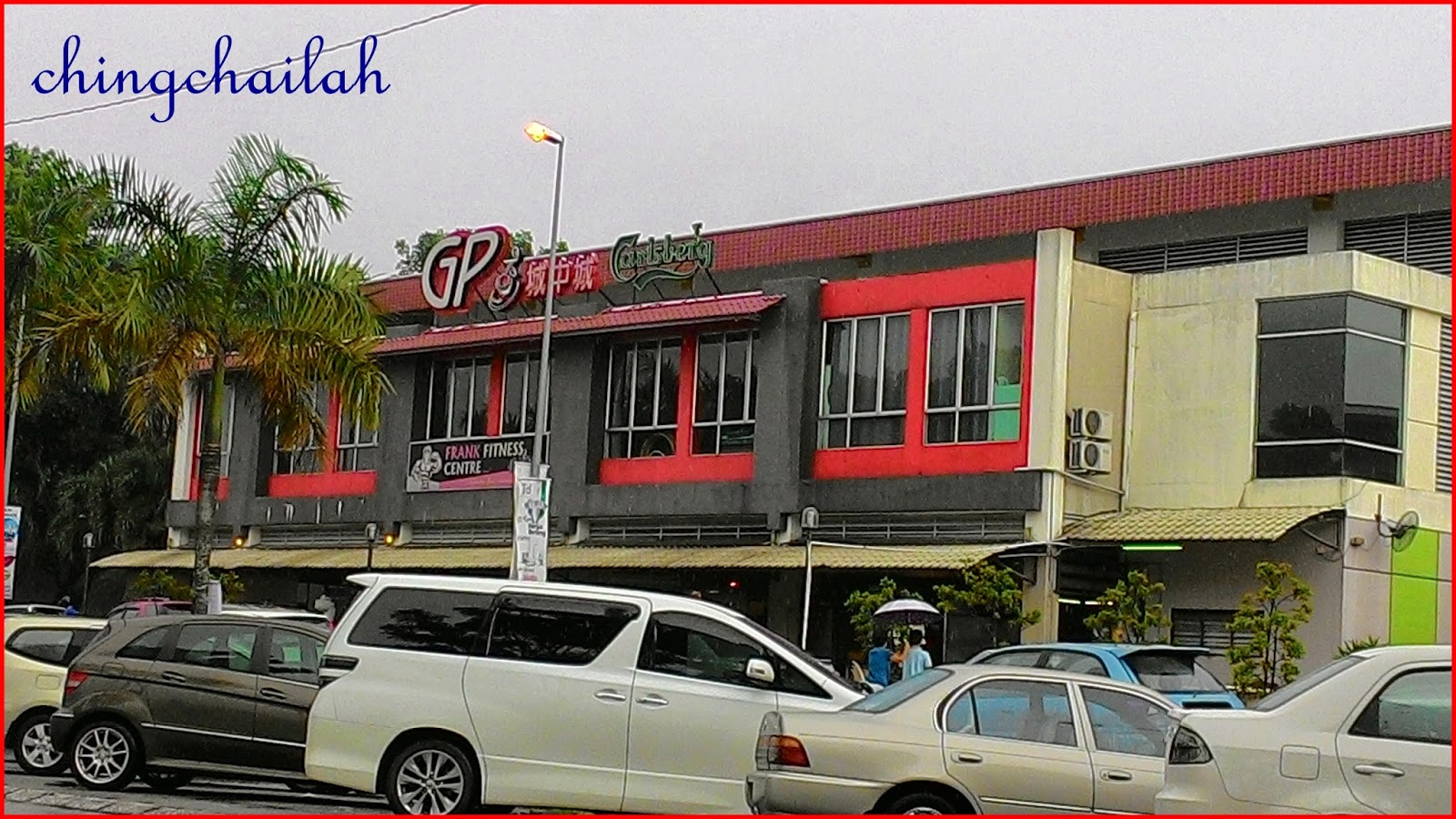
This is SU NASI KANDAR at GP Food Court, Jalan Ng Song Teik, Taman Pertama, Ipoh.
This is one full plate of nasi kandar for my husband and I, consisting of one full rice, one piece of fried chicken, prawn cooked sambal style, and two types of stir-fry vegetables.
Photo taken from this angle.

Another angle.

And finally this angle. Total cost MYR 8.60

Front view from Jalan Ng Song Teik.


He who walks with the wise grows wise,
but a companion of fools suffers harm.
(Proverbs 13:20, New International Version-NIV)

Thursday, 25 December 2014

GROWING PURPLE SHAMROCK (OXALIS) IN MY GARDEN

Purple Shamrock has many names. Some of its names are Oxalis Triangularis, Oxalis Regnellii, False Shamrock, Love Plant and etc. Its most common name is Purple Shamrock.
I bought my first Purple Shamrock plant from a plant nursery. I was so attracted to its leaves because they looked so like purple butterflies.
Purple Shamrock is a dainty, elegant looking plant. It has slender, delicate stems holding up its purple butterfly-like leaves. When it is full of leaves, it looks like a mushroom top with pale purple flowers holding its head above the leaves.
The leaves are deep purple in two shades, consisting of three segments shaped like hearts joining together at the pointed end of the hearts. The stems of the leaves can grow to about a foot long.
When there is light, the leaves will open up, but when the sun sets, the leaves will fold down. The length of the stem to the leaves can grow to about a foot long.

The flowers of Purple Shamrock are small, pink to pale purple with green centre held up high about two inches above the leaves by slim, delicate stems.
There are other varieties of Purple Shamrock, and I had a green one where its leaves are green and the flowers white.
Some green shamrock has pink flowers. My green shamrock plant has died, completely gone and I am still looking out for a green shamrock for my garden.
Purple Shamrock plant needs a few hours of sunlight or at least some brightness to be a healthy plant. It needs good drainage garden soil.
Poor drainage or too dry, the plant will die. If for some reasons the plant died, do not give up hope. The plant will grow again if the soil is kept moist.
Initially, when I was having my first Purple Shamrock plant, it looked so delicate and I dare not re-pot it or separate the plant to propagate. When my first Purple Shamrock plant died, I thought it was gone for good. I dug up the soil from its pot and mixed with new soil to grow other plants.

This Purple Shamrock plant grew from the tubers that got mixed with soil used for this pot.

After a while I was so surprised to see baby Purple Shamrock growing in some of these flower pots. The tubers must have got separated and survived the mixing of soil. That was how I found out that Purple Shamrock grows from its small tubers. As long as the tuber is not damage, the plant will grow back. It is easy to grow and to take care.
To propagate Purple Shamrock, unearth the whole plant, then carefully and gently separate and divide the tubers. Plant the separated tubers in separate pots. Very soon, new shoots will grow and multiply. It needs to be fertilized regularly, at least once in two weeks. It needs sunlight to flourish and stay healthy.
Purple Shamrock can be grown in pots and looks very pretty in hanging pots. It is grown for its attractive deep purple leaves. The wider the pot, the more and wider the spread of its leaves.
I was told that this plant is toxic to pets, so to be on the safe side, it is better to place the plant out of reach of pets. And that its leaves had an awful taste, probably to deter pets from chewing the leaves.
"Glory to God in the highest,
and on earth peace to men on whom His favor rests."
(Luke 2:14, New International Version-NIV)
~     ~     ~     ~     ~
Wishing all who are celebrating Christmas
"Blessed and Merry Christmas"
and to all and your loved ones,
"Happy New Year,
fill with overflowing joy and good health."
Related Posts Plugin for WordPress, Blogger...